
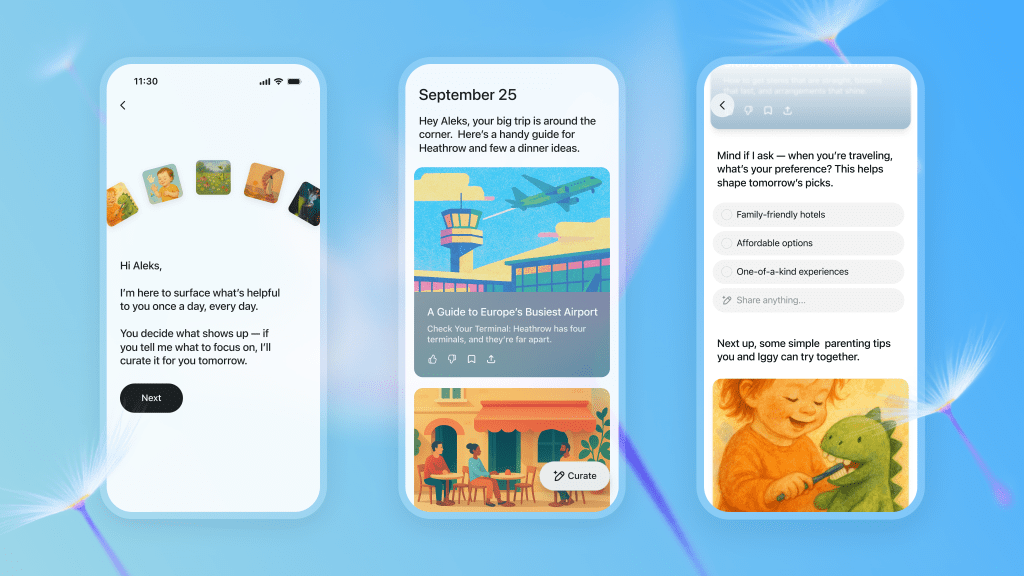
OpenAI has introduced a new feature within ChatGPT called Pulse, designed to generate personalized morning briefs for users while they sleep. The goal: to make ChatGPT more proactive and integrated into users’ day-to-day routines instead of merely reactive.
What Is Pulse?
Pulse delivers 5 to 10 brief reports each morning — think of them as tailored digests combining news, agenda updates, and personalized insights. It is aimed at encouraging users to open ChatGPT first thing in the morning, in much the same way many check their social media or news apps.
These briefs can cover:
- General news roundups
- Topic-specific updates (e.g. sports, tech)
- Personal context items (based on your calendar, emails, and ChatGPT memory)
- Suggestions or plans (e.g. travel itinerary ideas, reminders)

How It Works & Integration
Pulse shows each brief as a “card” featuring AI-generated text and images; tapping a card reveals the full report. Users can also ask ChatGPT follow-up questions about any card.
OpenAI is building Pulse to integrate with ChatGPT’s existing systems:
- It works alongside Connectors (e.g. Gmail, Google Calendar) to scan emails overnight and surface important items in the morning.
- If memory features are enabled, Pulse can use past chat context to tailor suggestions. For example, it might recommend running routes if you’ve previously discussed being a runner.
Importantly, the system is intentionally limited in the number of briefs it shows: once the set is delivered, it stops with a message like “Great, that’s it for today.” That design choice is intended to differentiate it from attention-driven social media algorithms.
Availability & Access
- Initially, Pulse will be available to users on ChatGPT’s Pro subscription plan (US $200/month) via a new tab in the ChatGPT app.
- OpenAI intends to expand access to Plus and free users later — once it optimizes efficiency and scales infrastructure.
- The high computational cost of generating these briefs is one reason Pulse is limited to higher-tier plans for now.
Strategic Context & Challenges
Pulse represents a shift in OpenAI’s approach: moving from just reactive chat responses to a more “assistant-style,” always-on presence in users’ lives.
OpenAI executives acknowledge that building and scaling such features is resource-intensive. The company has previously noted constraints in server capacity and is actively expanding infrastructure in collaboration with partners like Oracle and SoftBank.
Critics may see overlap with existing news aggregators, email clients, or calendar tools. But OpenAI insists Pulse is not meant to replace news apps; instead, it’s meant to complement them by synthesizing and contextualizing content in one place. Pulse will cite its sources with links — as the standard ChatGPT Search does — thereby maintaining transparency.
In future, OpenAI envisions Pulse becoming more agentic: for instance, drafting emails for users to approve or even acting on their behalf (e.g. making reservations). But such capabilities would depend on advancements in agent models and user trust.
What to Watch
- User adoption & feedback: Will users embrace a proactive brief over traditional news apps?
- Performance vs. cost: How efficiently can Pulse scale, especially for users with less powerful plans?
- Privacy & control: How transparently will OpenAI handle user data (e.g. email, calendar)?
- Feature evolution: How quickly can Pulse evolve into a more actionable assistant?
Pulse is now live for Pro users. OpenAI’s next moves — whether to expand access or add more agency — will reveal whether this is a meaningful step toward ChatGPT becoming an always-present, contextually aware assistant.




 NudgedUp
Leave a comment