
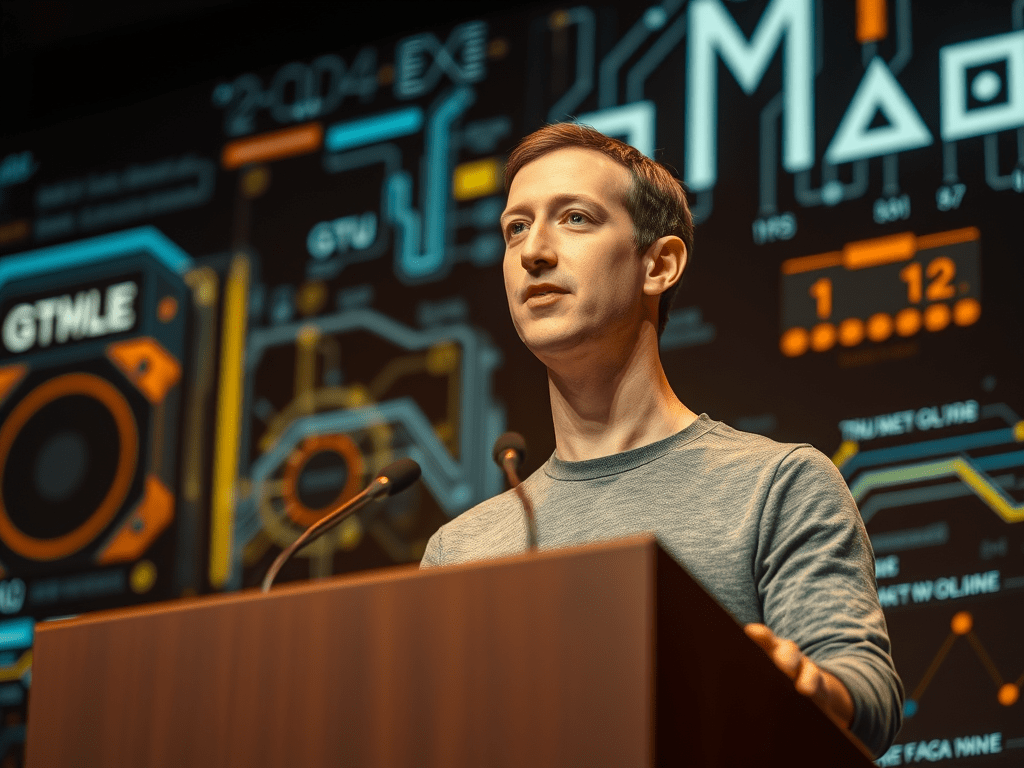
In a bold declaration of intent, Meta CEO Mark Zuckerberg announced on Monday that the company plans to invest hundreds of billions of dollars into the development of superintelligence—an advanced form of artificial general intelligence (AGI). The move signals Meta’s most aggressive push yet to become a frontrunner in the global AI race.
The investment will focus heavily on compute infrastructure, research, and talent acquisition, and will be spearheaded by a newly formed internal division called Meta Superintelligence Labs (MSL).
Meta Superintelligence Labs: A New AI Powerhouse
Zuckerberg introduced Meta Superintelligence Labs (MSL) as the company’s central engine for AI innovation moving forward. The lab consolidates Meta’s previous AI divisions—including teams working on foundational models, applied AI, and research—into a single unified entity.
Two high-profile leaders will guide the lab’s direction:
A Historic Investment in Compute Power
Meta has already committed to spending $60–65 billion on AI infrastructure in 2025, according to Zuckerberg’s earlier disclosures. This includes plans to install over 1.3 million GPUs and scale its computing power beyond 1 gigawatt by the end of the year.
However, Zuckerberg now suggests that Meta is prepared to go well beyond those numbers.
“We believe developing superintelligence will be the most important technological challenge of our generation. And we are ready to invest hundreds of billions to get there,” he said in a statement.
Strategic Moves: Talent and Acquisitions
To support this aggressive push, Meta recently acquired a 49% stake in Scale AI for $14.3 billion—giving it privileged access to data infrastructure and top engineering talent. Wang’s move to Meta further solidifies the alliance.
Meta has also launched one of the largest hiring campaigns in Silicon Valley’s AI sector, targeting top minds from Google DeepMind, OpenAI, Anthropic, Apple, and other AI research firms. Reports indicate that some packages include signing bonuses of up to $100 million for senior researchers.
This aggressive hiring strategy underscores the tech giant’s determination to outpace its competitors.
Why It Matters: The AGI Race Is Heating Up
Meta’s announcement arrives at a time when major players like OpenAI, Google, Microsoft, and Anthropic are all racing to build artificial general intelligence—AI that can reason, plan, and learn across domains as well as (or better than) humans.
Zuckerberg’s vision of superintelligence suggests that Meta aims not just to catch up, but to lead in this next frontier of technological evolution.
But Challenges Remain
Despite its financial muscle, Meta faces serious challenges:
- Its recent Llama 4 model has been criticized for underperformance compared to rivals.
- Several key researchers left earlier this year, citing concerns over direction and alignment.
- Ethical questions remain around the risks of uncontrolled AI development, with growing calls for safety-first frameworks and international regulation.
While Zuckerberg has expressed a commitment to building “safe and beneficial” AGI, critics argue that powerful AI systems must be developed with extreme care, particularly given their potential to impact economies, governments, and individual rights.
Zuckerberg’s announcement marks a defining moment for Meta, signaling a dramatic shift in priorities—from social media dominance to AI superintelligence leadership.
With massive infrastructure spending, key acquisitions like Scale AI, and the creation of Meta Superintelligence Labs, the company is betting its future on the belief that the next tech revolution will be led by those who master AGI.
Whether that gamble pays off—or intensifies the global AI arms race—remains to be seen.




 NudgedUp
Leave a comment